Table of Contents
- The Basics of Green Algae
- What Causes Green Algae to Grow on Siding?
- Humidity and Moisture
- Limited Sunlight
- Poor Air Circulation
- Rainwater and Splashback
- Dirt and Organic Debris
- Is Green Algae Harmful to Your Siding?
- How to Prevent Green Algae on House Siding
- How Professional Exterior Cleaning Removes Algae
If you’ve ever noticed green discoloration on your home’s siding, you’ve probably wondered why it’s there and how to get rid of it. This is often green algae, which is more than just a cosmetic concern — it can be a sign of larger issues.
Keep reading to learn more about what green algae is, what causes it to grow on siding, its potential harmful effects, how to prevent it, and how professional exterior cleaning from Multiman Services can help.
The Basics of Green Algae
Algae is different from mold and mildew. It’s a single-celled organism without stems, leaves, or roots, although it performs photosynthesis just like a plant, which is what gives it its green color. It can appear as green streaks or patches, but it can also look like a thin film or patches of dark discoloration.
Green algae can develop on many outdoor surfaces, including vinyl, painted wood, and fiber cement siding. It can spread across siding as moisture runs down the exterior, and streaks may be especially noticeable beneath gutters and rooflines, along with other areas where water collects or runs. Additionally, uneven exposure to sunlight and moisture can cause some areas to turn green while others remain clear.
What Causes Green Algae to Grow on Siding?
Let’s take a closer look at why green algae tends to grow on siding.
Humidity and Moisture
Algae needs moisture to grow and reproduce. Humid climates and frequent rain can create the right conditions for it to thrive, and when siding stays damp for long periods of time, it’s particularly susceptible to algae growth.
Limited Sunlight
Shaded areas dry more slowly than those in direct sunlight. This means that north-facing walls, areas beneath trees, siding beneath roof overhangs, and walls blocked by neighboring structures are all at a greater risk of algae growth.
Poor Air Circulation
Dense landscaping can prevent siding from drying. If bushes, vines, trees, or other vegetation are growing close to your home, it creates an area of reduced airflow where moisture doesn’t dry and algae can thrive.
Rainwater and Splashback
Rainwater repeatedly hitting or splashing against siding can keep it damp and create the perfect breeding ground for green algae. This can happen when downspouts drain too close to the house, the gutters are clogged or overflowing, or the sprinklers spray onto the siding.
Dirt and Organic Debris
Dirt, pollen, leaves, and other organic material can accumulate on siding over time. These materials can retain moisture and create the right conditions for algae growth. This is especially true for siding that’s not regularly cleaned.
Is Green Algae Harmful to Your Siding?
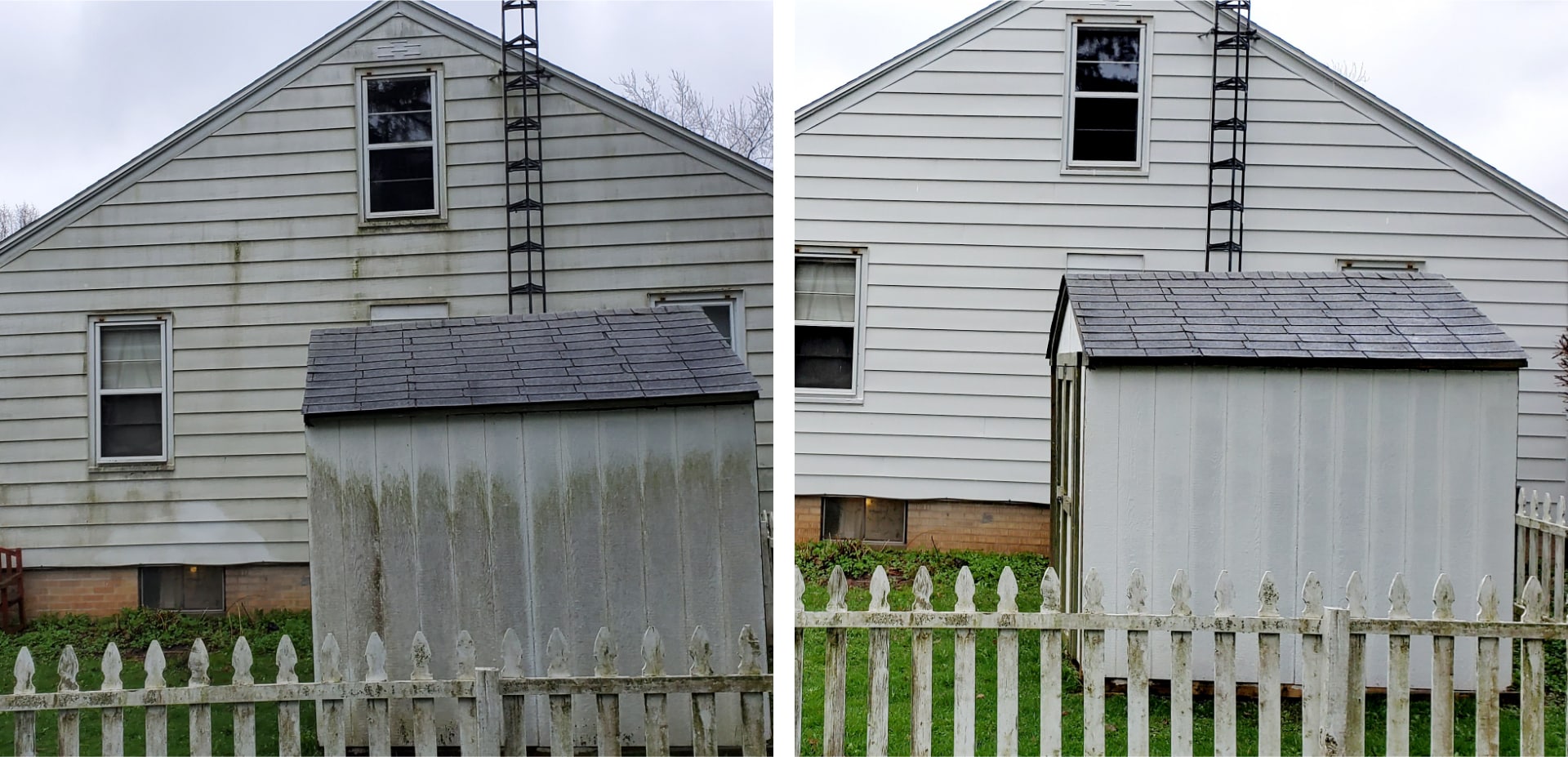
Green algae’s main issue is that it makes your home look old, dirty, and neglected, no matter when it was built or how well you maintain it. It majorly affects curb appeal, bringing down the appearance and atmosphere of your whole property.
Green algae may be primarily a cosmetic problem, but that doesn’t mean it’s okay to ignore. Certain siding materials may be more vulnerable to staining or deterioration when moisture and contaminants remain on the surface.
In most cases, algae itself may not be particularly harmful to your siding, but it’s an indication of something else that can damage your home: moisture. Persistent organic growth and moisture can break down siding materials over time and cause wood rot, mold, and mildew growth. Algae growth lets you know that there’s a moisture problem that needs to be addressed before real damage can occur.
How to Prevent Green Algae on House Siding
Preventing green algae growth means reducing unnecessary moisture. Adjust the sprinklers so they don’t spray the house, and if leaks or drainage issues occur, address them promptly. Keep your gutters and downspouts clean and make sure they direct water away from the foundation and siding. Trim back any nearby vegetation to improve sunlight exposure and airflow around problem areas.
It’s also important to clean your siding regularly to remove dirt and organic buildup before it becomes a larger problem.
How Professional Exterior Cleaning Removes Algae
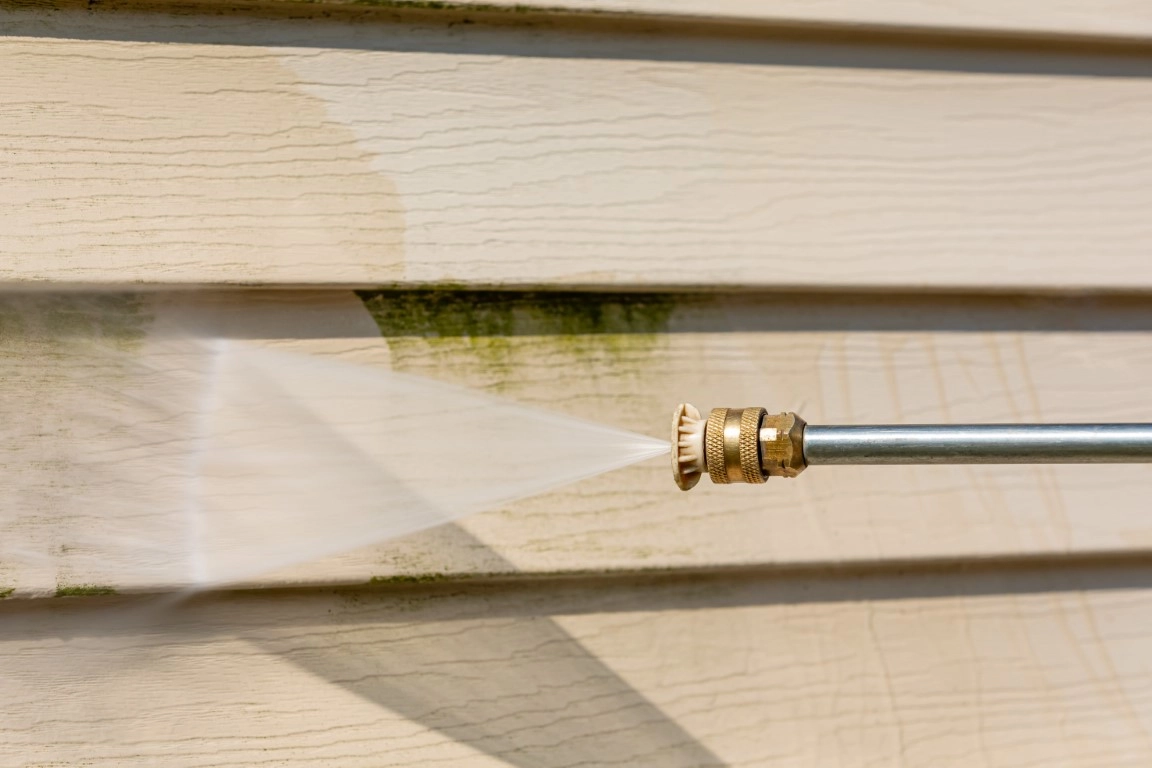
Many homeowners attempt to remove green algae themselves; however, using excessive pressure or the wrong cleaning products can damage your siding. To protect your home, it’s always best to work with professionals who understand which cleaning technique is appropriate for which material.
At Multiman Services, we use soft washing and other low-pressure cleaning methods where appropriate to remove green algae and other organic buildup from siding. We’re dedicated to improving your home’s curb appeal and reducing the appearance of stains and discoloration, even in difficult-to-reach areas.
If you’re fed up with stubborn algae stains on your home’s siding, reach out to us today to get a quote for our expert exterior cleaning services.